My traveling started early in 2009, returning from Quebec on 1 January and
leaving for England on the 2nd for the big Baha'i conference. I did not take
my camera on short trips for meetings and lectures in Cambridge, Brighton,
Rome, Berlin, Paris and Prague, but I did get some pictures of the
International Climate Change Science Congress in Copenhagen, and of the
beautiful city of Delft while attending a dear friend's wedding. Other trips
followed, including a vacation with my brother and his family in Bulgaria,
visits to Rouen, Bornholm, Malaga and Croatia while speaking or teaching,
and a wonderful celebration at Windsor Castle of the launching of the Bahá'í
International Community Plan of Action on Climate Change. The year ended
with the International Climate Change Conference in Copenhagen.
ENGLAND
I had to go to England for work at the University of Brighton in connection
with our values-based indicators project, but I was also able to attend the
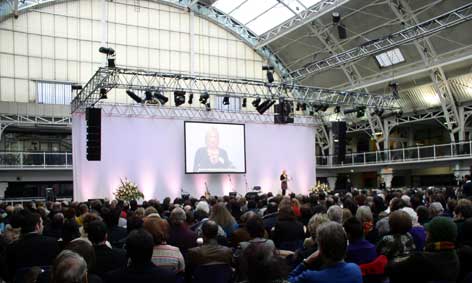
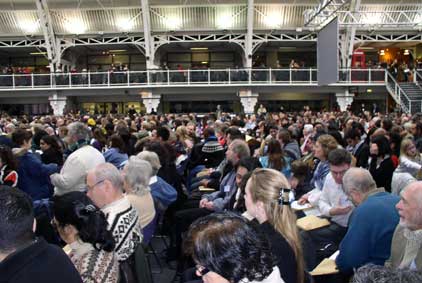
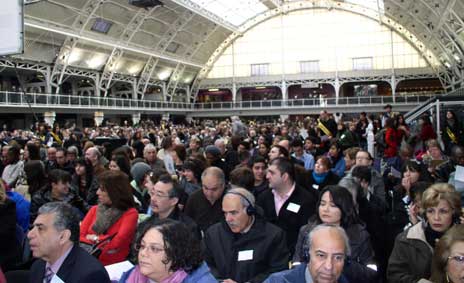
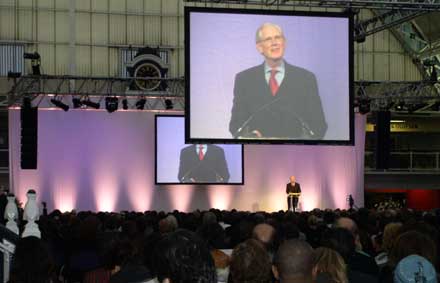
regional Baha'i conference in London on 3-4 January 2009. There were over
3100 participants, mostly from the United Kingdom, Ireland and Scandinavia.
It was a very inspiring occasion.
 .
. 
 .
. 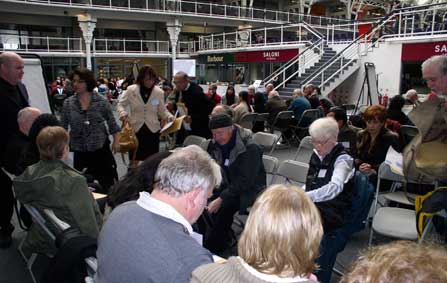
The enormous hall was packed with Baha'is from many backgrounds. Workshops
allowed participants from each country to plan their own activities.
 .
. 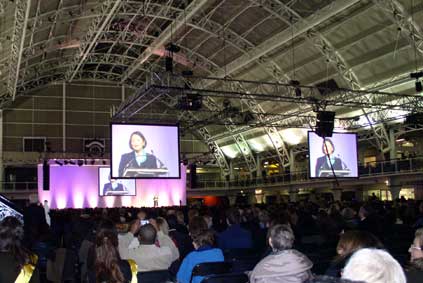
Two representatives of the Universal House of Justice from the International
Teaching Centre addressed the conference
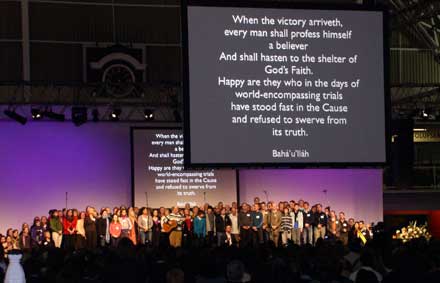
A choir assembled for the occasion by the Irish Baha'is provided the finale.
COPENHAGEN, DENMARK
The International Climate Change Science Congress in Copenhagen on 10-12
March was intended to summarise the latest scientific views on climate
change before the intergovernmental conference on climate change in
Copenhagen in December 2009. I attended for the International Environment
Forum, along with Sylvia Karlsson, the IEF General Secretary. My presentation
was on "The response to climate change from the Baha'i community" and
featured the relevant IEF conferences and related events.
Over 2200 scientists participated in the congress with over 600
presentations. The plenary talks in particular were excellent but
depressing, as everyone said that climate change was preceding faster than
the worst predictions of the IPCC two years ago.
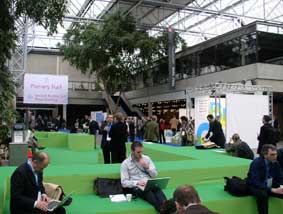
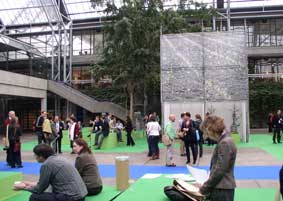
 Plenary session
 .
.  .
. 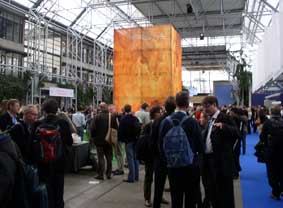
Bella Centre where the congress was held, and where the December
intergovernmental conference will take place
Poster and exhibit area 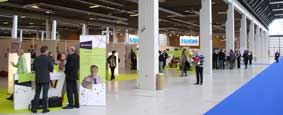
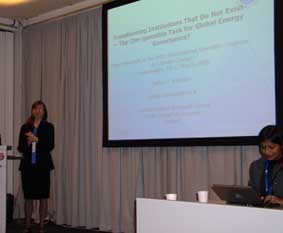
Sylvia Karlsson presenting her paper on energy governance
 Panel with Sylvia Karlsson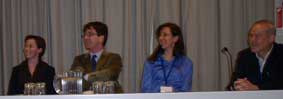
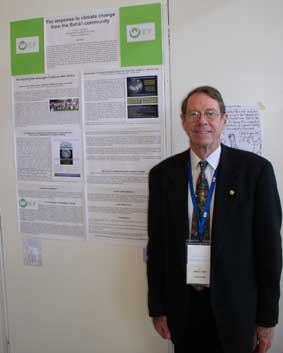
IEF poster presented by Arthur Dahl
.  .
.
DELFT, THE NETHERLANDS
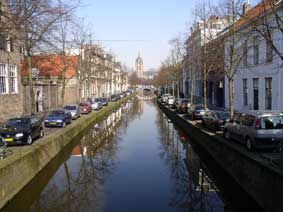
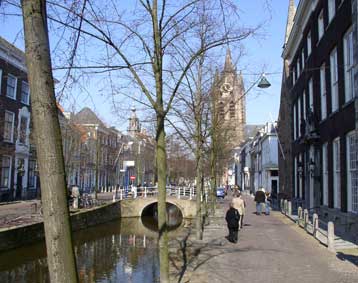
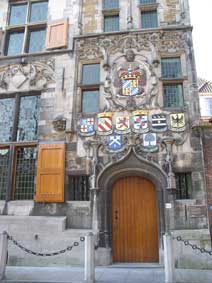
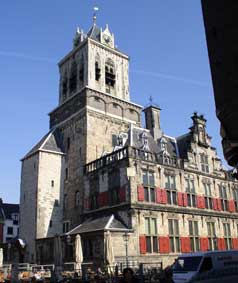
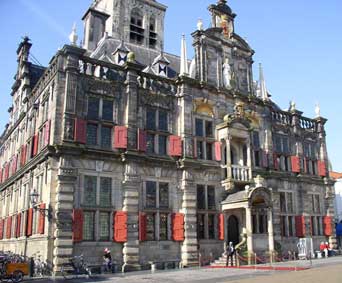
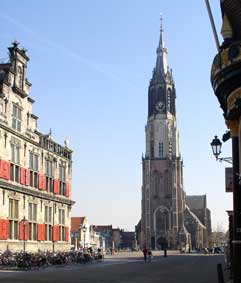
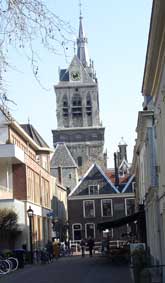
Delft is a beautiful small city with canals through its historic centre and
some lovely old buildings. The following are some glimpses from a stroll
through the town centre, before walking to a park near to the city for
Sylvia Karlsson's wedding in the afternoon.
 .
. 
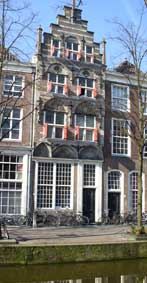
Old houses
 .
.  .
. 
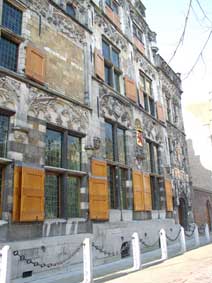
City hall and church at opposite sides of the central square
 .
.  .
. 
 Old farmhouse along canal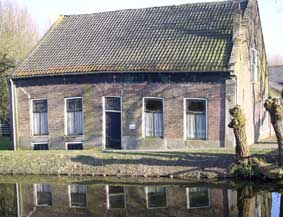
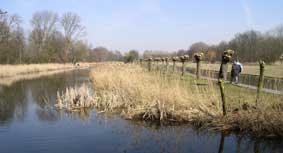
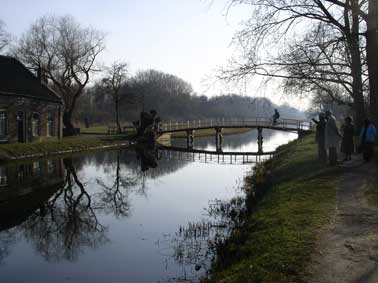
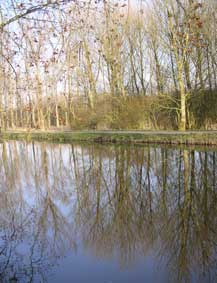
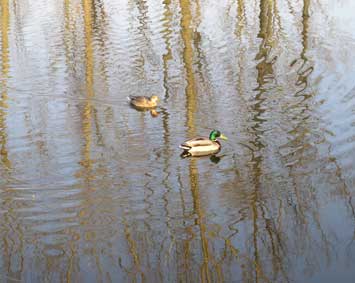
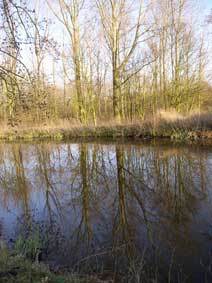
Views in the park next to Delft where the wedding took place
 .
. 
 .
.  .
. 
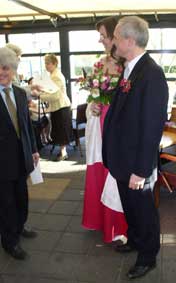
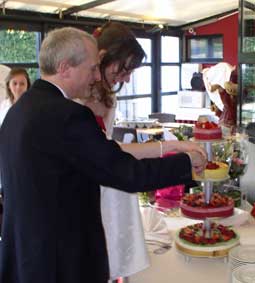
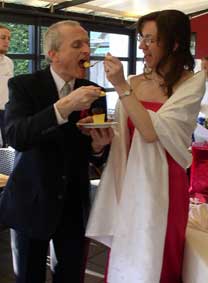
Wedding of Sylvia
Karlsson and Onno Vinkhuyzen
Delft, 21 March 2009
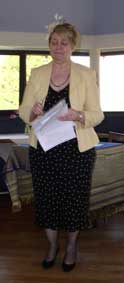
Dr. Sylvia Karlsson from Sweden, a long-time friend and General Secretary of
the International Environment Forum,
encountered Onno Vinkhuyzen, a Dutch member of the European
Baha'i Business Forum, at the joint conference
of the two organizations last September. The relationship blossomed, and
they married on 21 March, the first day of Spring and Naw-Ruz (the Baha'i
New Year), in a small tea house in the park not far from the centre of
Delft.
 .
.  .
. 
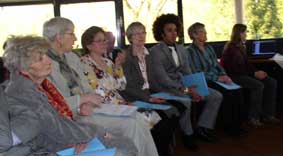
Wendi Momen presided
Some of the
readers
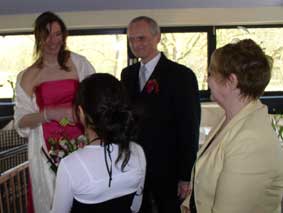
Arrival of the bride and groom
 .
. 
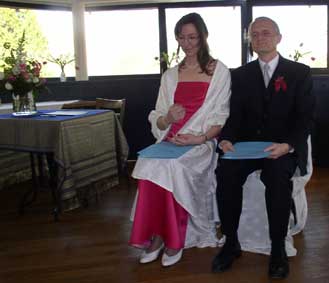
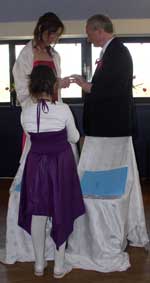
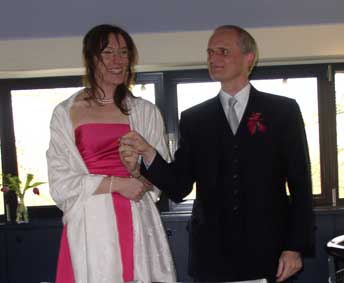
The start of the ceremony
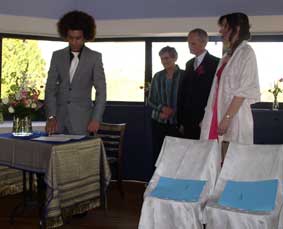
Witnesses signing the wedding certificate
 .
.  .
. 
The rings
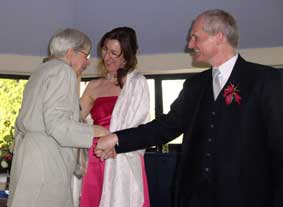
At the end of the ceremony
Congratulations of the bride's mother
 .
.  .
.  .
. 
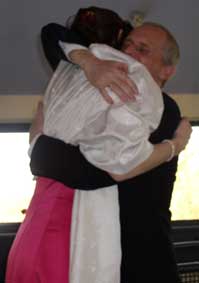
The first hug
Receiving the guests
Cutting the
cake, and exchanging mouthfuls
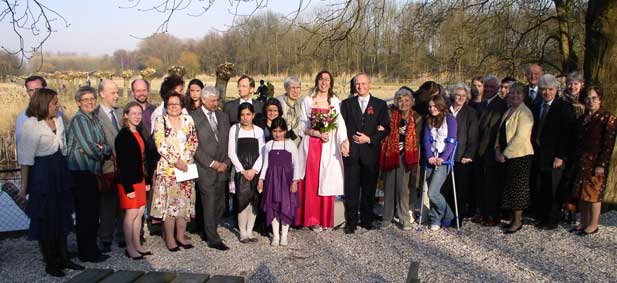
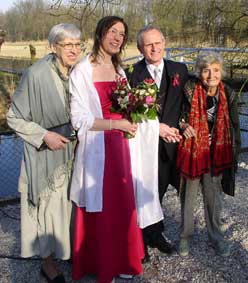
Group photo of the wedding party
 .
. 
With the mothers of the bride and groom
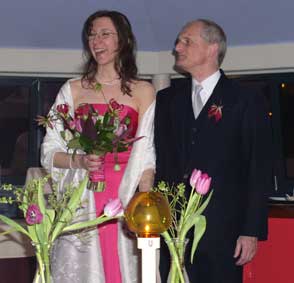
The happy couple
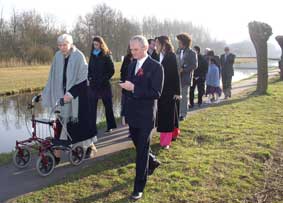
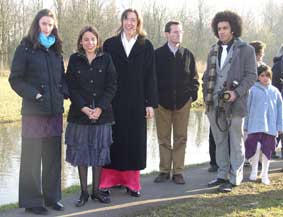
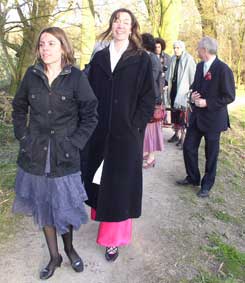
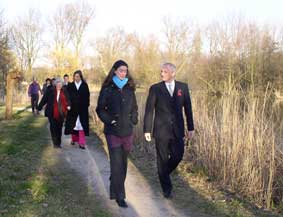
A walk through the park along the canal before the wedding dinner
 .
. 
 .
. 
Grenoble and
Savoie, France
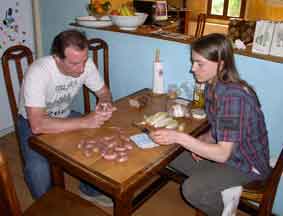
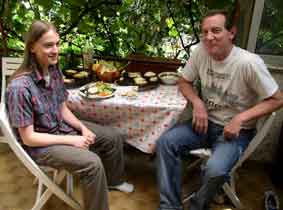
When a young Dutch intern, Lieuwe Vinkhuyzen, came to work with me for two
weeks in May 2009, I showed him some of the sights, including Geneva and the
Saleve (see the Switzerland page)
and my chalet (see the activities
page), as well as a visit to my good friend and island specialist Christian
Depraetere in Grenoble. We also drove through the Massif des Bauges on the
way back.
 .
.  .
. 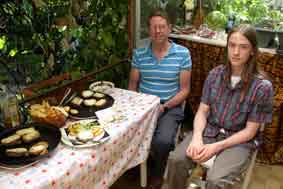
Christian asked Lieuwe to make a traditional Dutch recipe for lunch
 .
. 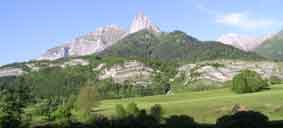
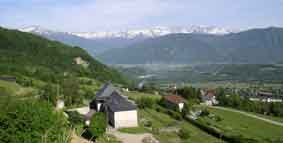
Views from above St. Pierre d'Albigny (where we used to live) and in
the Bauges
Bulgaria
In June 2009, I spent two weeks with my brother Greg and his family (Emi,
the twins Joyce and Gregory, and Mina) who live in Blagoevgrad, Bulgaria.
They made it into a real vacation with some days in two different mountain
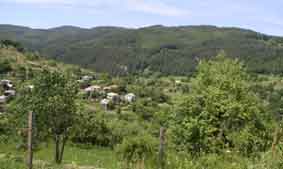
resorts hiking and swimming. Some of the pictures of Bulgarian mountain
scenery and streams can also be seen on my photo
page.
 .
.  .
. 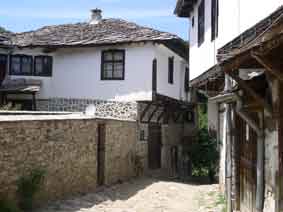
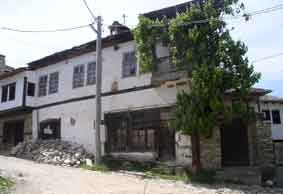
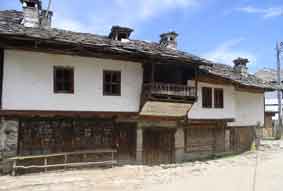
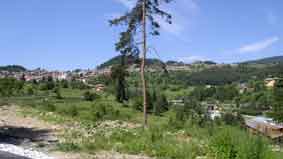
Traditional Bulgarian houses in the village of Dolen
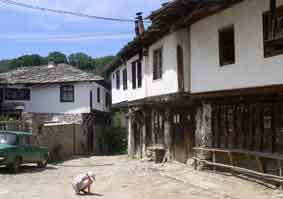 Gregy liked to try to remove stones from the road
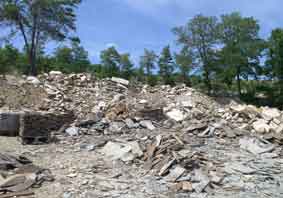
In many places along the road, people split stones for the construction
industry, but with the recession, business was not good
 .
.  .
. 
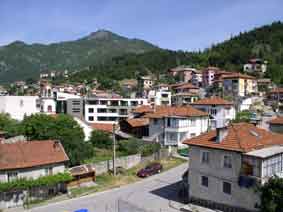
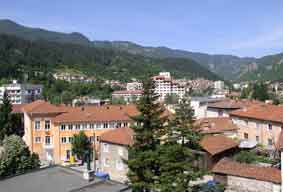
We spent a few days in the spa town of Devin, famous for its mineral water.
The hotel had a nice indoor pool, so we swam every day.
 .
.  .
. 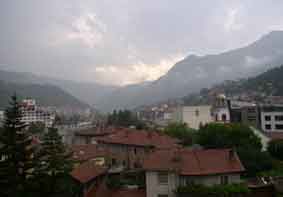
Views from our hotel in the spa town of Devin, known for its mineral
water
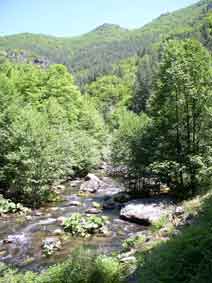
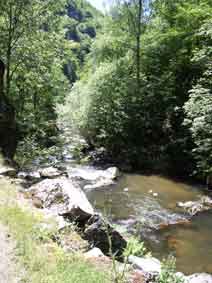
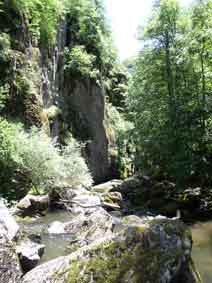
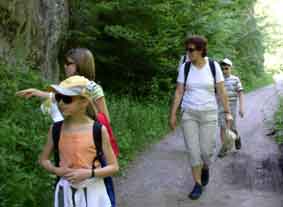
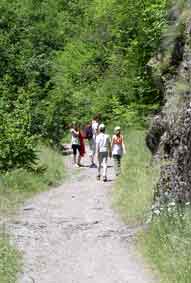
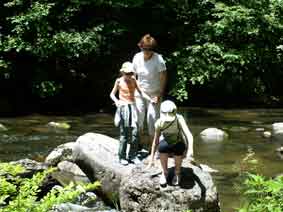
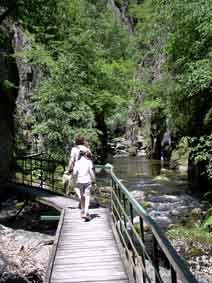
The river above Devin winds through a rocky gorge, where the trail in some
places is suspended over the water on a boardwalk. We hiked up the river,
stopped for a picnic lunch, went as far as a farm above the gorge where we
stopped to play Rummy-o, and then walked back down again, admiring
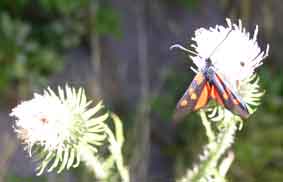
wildflowers and butterflies, and taking many pictures of the rocks and water
(see my photo page).
 .
.  .
. 
 .
.  .
. 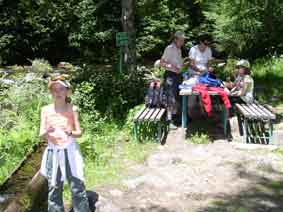
Joyce, Mina, Emi and Gregy, and the picnic lunch by river
 .
.  .
. 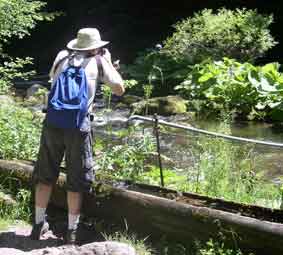
The Dahl family, and Greg taking pictures
 .
.  .
. 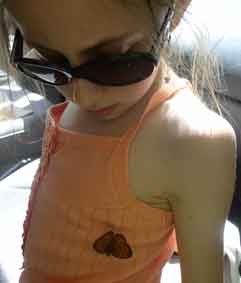
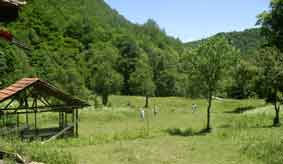
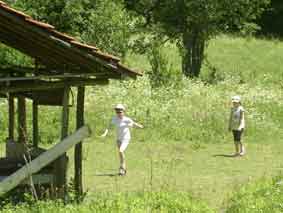
The farm above the gorge where we stopped to play Rummy-o, and a
butterfly landed on Joyce
 .
.
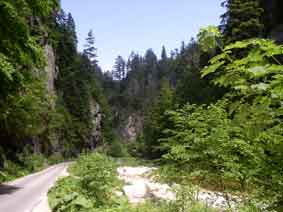
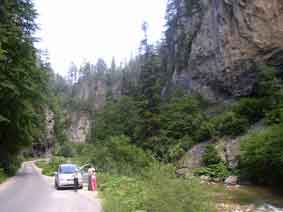
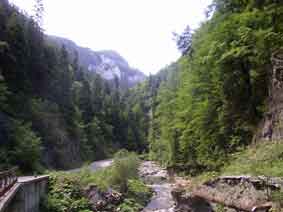
From Devin, we made an excursion to Yagodina, with a spectacular gorge and
caves with beautiful stactites and stalagmites.
 .
.  .
. 
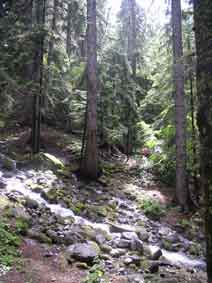
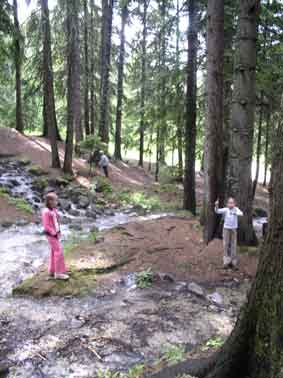
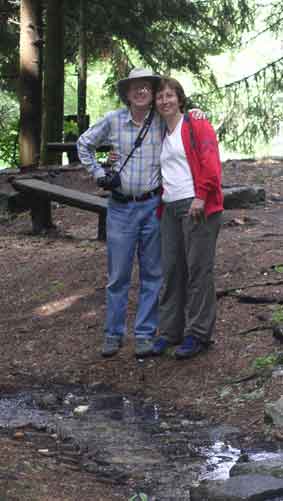
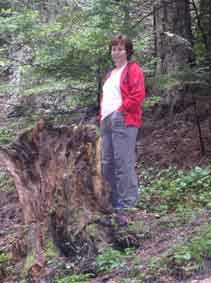
We stopped for a night in the ski resort of Bansko where the kids had gone
for a school outing. A spring-fed stream gushed through the forest.
 .
.  .
. 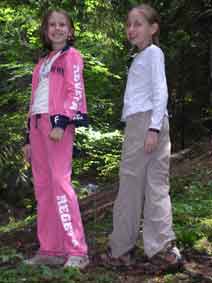
Mina and Joyce in the forest
 .
.  .
. 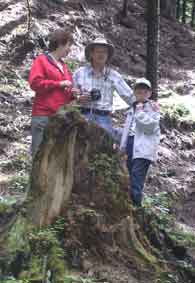
Greg and Emi, and Gregy
Bornholm, Denmark
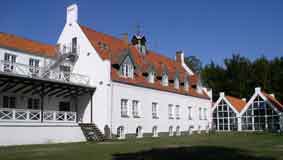
At the beginning of August 2009, I went to the Danish island of Bornholm in
the Baltic, to teach at the Danish Bahá'í Summer School. The school was a
short walk from the beach, and we also had a day of rest in mid-school to
visit some parts of the island, which is also an artists' colony.
 .
. 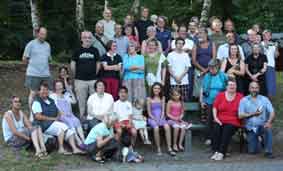
The school buildings, and the Danish Bahá'í Summer School
 View from centre of Bornholm
  .
.
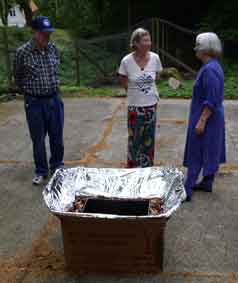
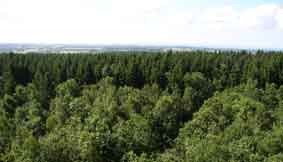
A solar oven made in a practical workshop (left); From the highest
point on Bornholm where a tower has been built, you can barely see the sea
(right)
 .
. 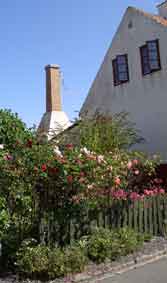
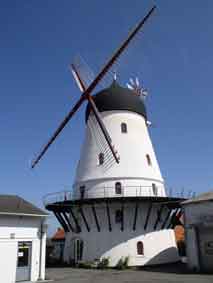
Windmill in Svaneke, now an ecological centre and restaurant, and old
chimney for smoking fish
 .
. 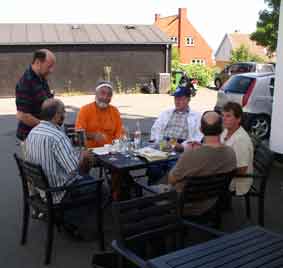
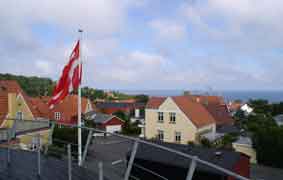
View from the windmill; some Bahá'ís at lunch
 .
. 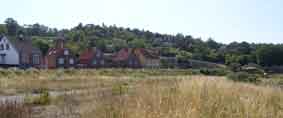
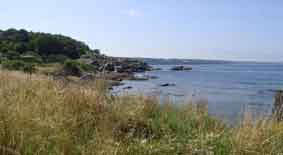
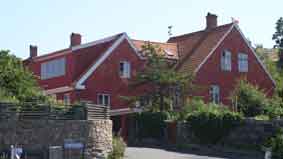
Coastline and houses at Gudhjem, on the north side of the island
 .
. 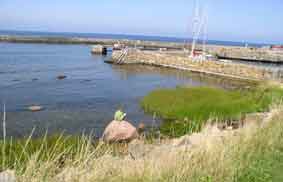
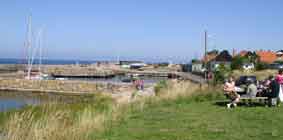
Harbor at Gudhjem
 .
. 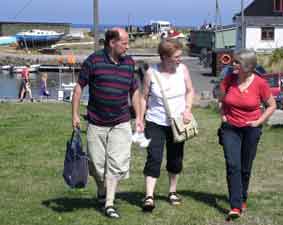
Norresan, artist Oluf Høst's home and now gallery; Ole, Jane and
Gird, who took me around the island
 .
. 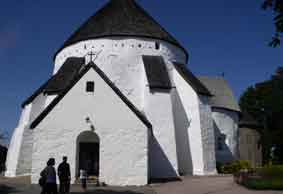
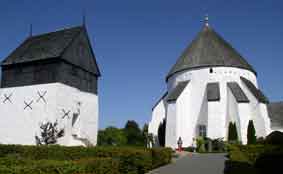
Medieval round church, Rundkirke, in Osterlars, that also served as a
defensive tower and refuge from invaders
 .
. 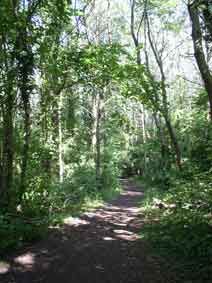
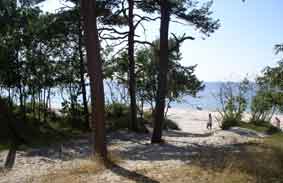
Path from the school to the beach
 .
. 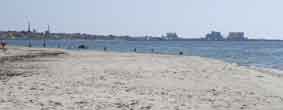
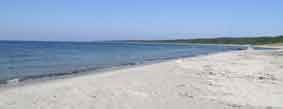
Beach near Ronne, and Ronne harbor in the distance
Washington, D.C., USA
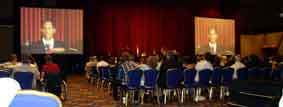
On 13-16 August 2009, the International Environment Forum held its 13th
Conference in Washington, D.C., in association with the annual conference of
the Association for Bahá'í Studies - North America. There were nearly a
thousand participants. A full report
is on the IEF web site.
 .
. 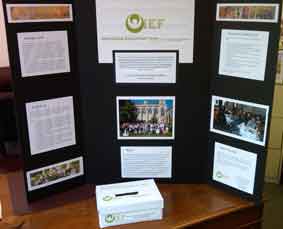
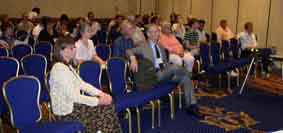
The plenary hall; an IEF exhibit
 .
. 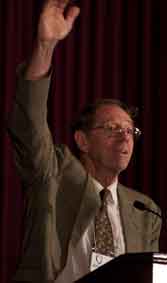
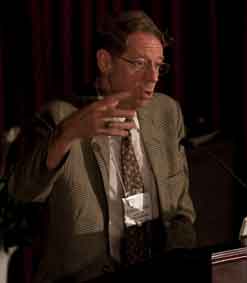
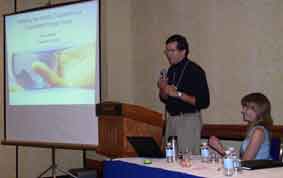
I gave the opening keynote on "Transforming environments from the
inside out"
 .
. 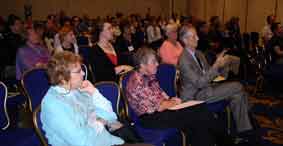
IEF paper sessions
 .
.  .
.
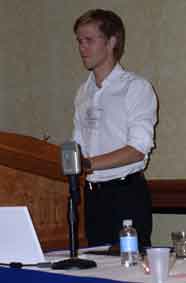
Speakers Larry Staudt (left) and Samuel Benoit (right)
 .
. 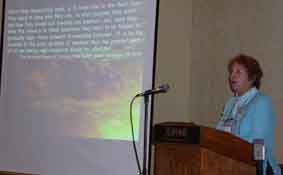
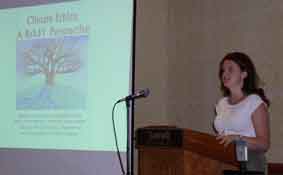
Speakers Tahirih Naylor-Thimm (left) and Carol Curtis (right)
 .
. 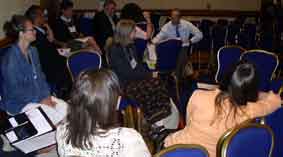
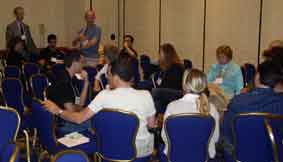
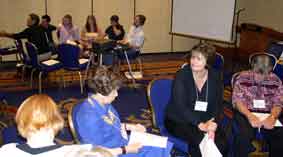
Workshops
 .
. 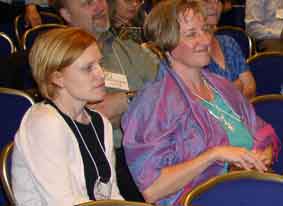
Workshops (left); new IEF board members Emily Firth and Diana
Cartwright (right)
Quebec, Canada
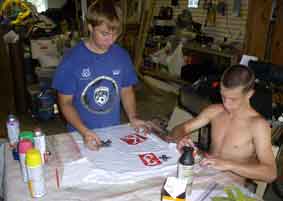
After the IEF conference, I stopped for a few days in Quebec to visit my son
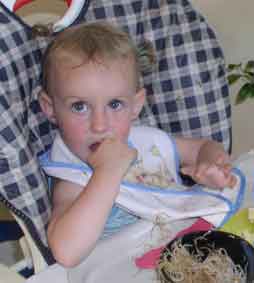
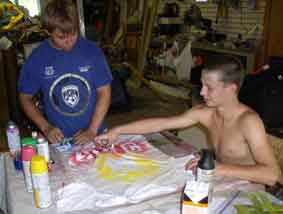
Alex and his family. The time was too short for many pictures, but I did get
one of my granddaughter Alie, and my step-grandson Jérémie and a friend
stenciled a t-shirt especially for me.
 .
. 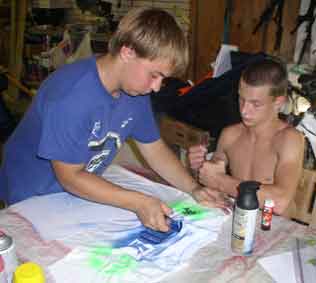
My granddaughter Alie (left); my step-grandson Jérémie and friend
custom stencil me a t-shirt (right)
 .
. 
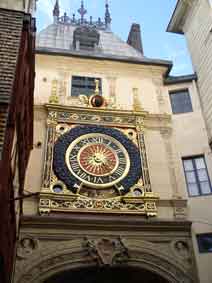
Rouen, France
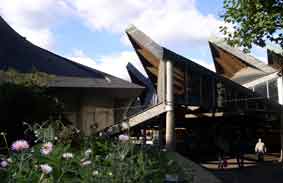
In October 2009, I took the train to Rouen and Caen in the north of France
to speak on climate change and its ethical implications for an inter-faith
group in Rouen and some environmental associations in Caen, both organized
with the collaboration of local Bahá'ís. There was a little time to walk
around Rouen and see some of the architectural beauties of the capital of
Normandy.
 .
. 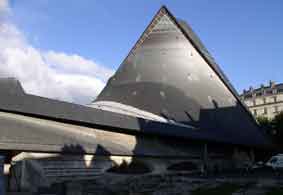
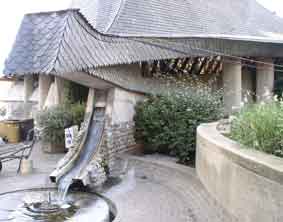
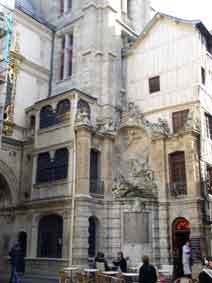
Architecturally stunning market and church
 .
. 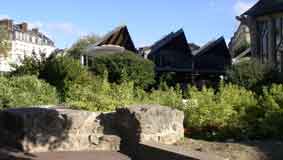
Next to the market (right) is the spot where Joan of Arc is supposed
to have been burned at the stake
 .
.  .
. 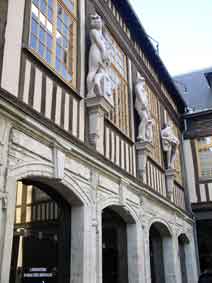
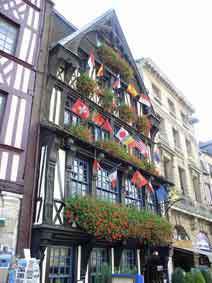
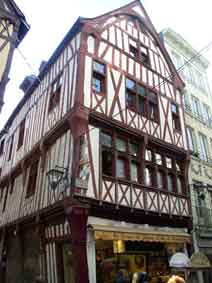
Old houses and businesses
 .
.  .
. 
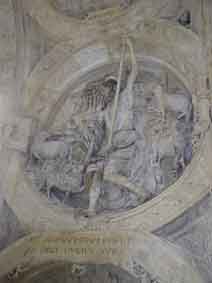
Clock tower and gate with sculptured ceiling
 .
.  .
. 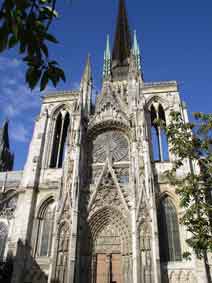
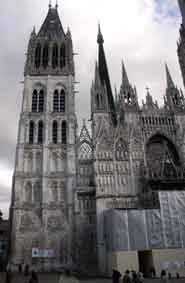
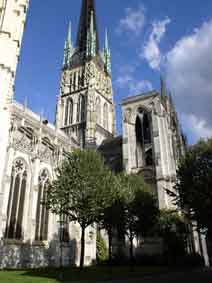
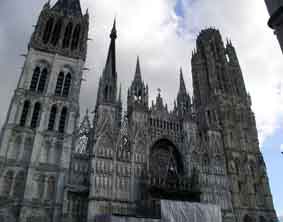
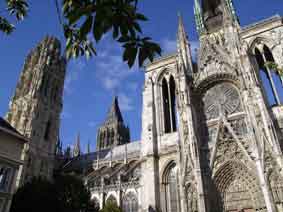
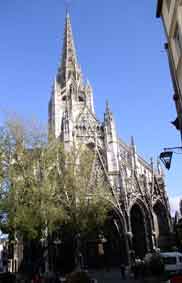
Rouen Cathedral
 .
. 
 .
.  .
. 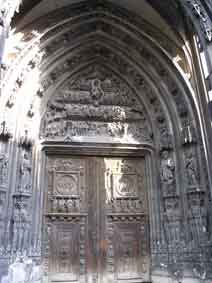
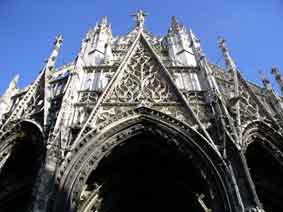
One of many old churches
 .
. 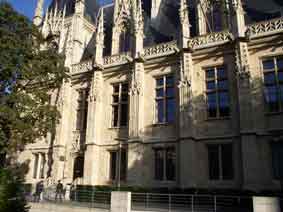
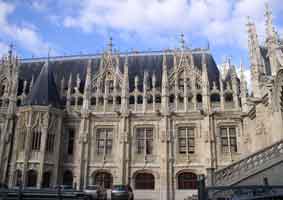
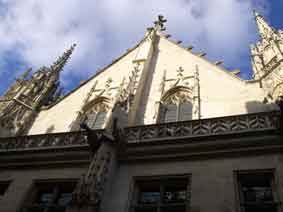
The Palace of Justice, badly damaged during the war and under
restoration for 50 years
 .
. 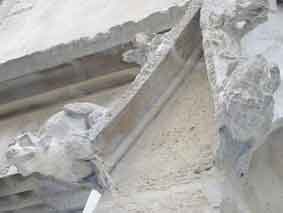
Palace of Justice, with a restored gargoyle
 .
.  .
. 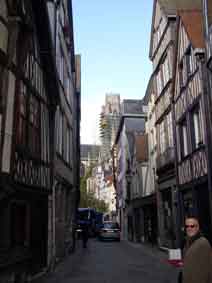
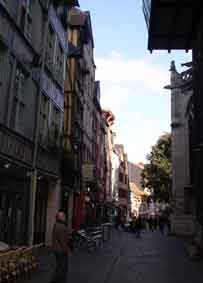
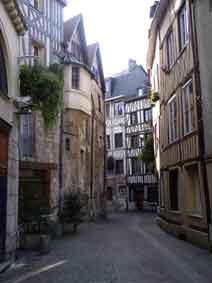
Narrow streets in the old centre of Rouen
 .
.  .
. 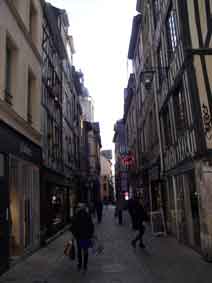
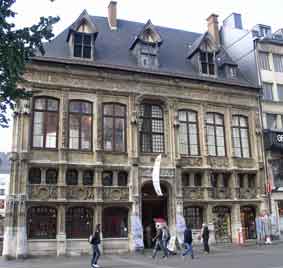
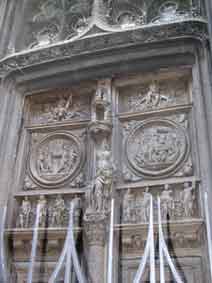
The Chamber of Commerce, and interesting architectural details
everywhere
Rovinj, Croatia
On 27 October I traveled to Rovinj, an historic city on the Istrian
Peninsula of northern Croatia, as the emissary of a large number of former
colleagues and admirers of Stjepan Keckes, founder of the Regional Seas
Programme of the United Nations Environment Programme, the Mediterranean
Action Plan and Barcelona Convention, and many other regional action plans
and conventions. I had been Stjepan's deputy for a few years in Nairobi and
consider him one of the most outstanding people I have had the pleasure to
work with. Stjepan has always refused any awards or credit for what he has
accomplished, so through a world-wide conspiracy of his many friends, we
created a unique award in his honour, the Siren Award 2009, as well as a web
site with tributes from most of his friends and colleagues over the last 50
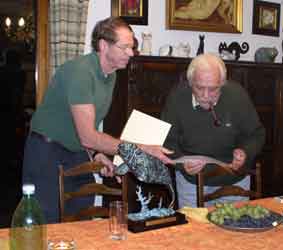
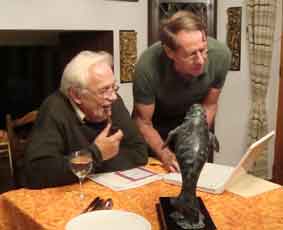
years. It fell to me to surprise him with the presentation of this award.
 .
.  .
. 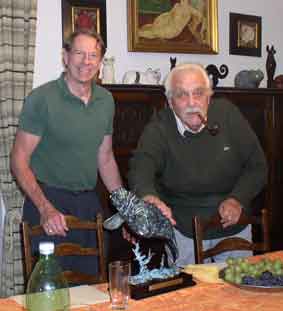
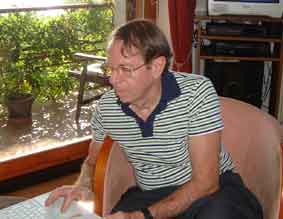
Presenting the Siren Award 2009 to Stjepan Keckes
 .
. 
Showing Stjepan the web site created for him by his many
friends
 .
.
 .
. 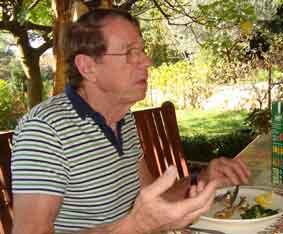
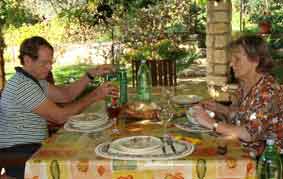
Lunch with Mera Keckes and Stjepan by their beautiful garden (photos
by Stjepan Keckes)
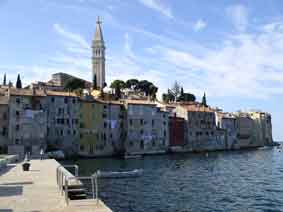
Stjepan and his lovely wife Mira hosted me for the night at their beautiful
house with a lush garden and view of the Adriatic Sea, fed me Croatian
delicacies, and left some time for me to visit the old city of Rovinj.
 .
.
 .
. 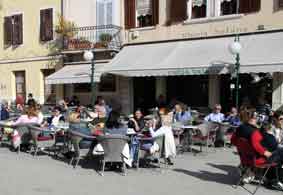
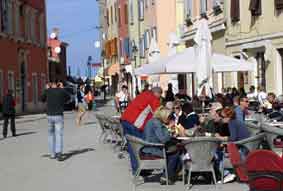
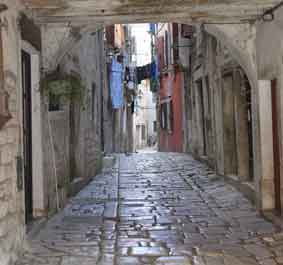
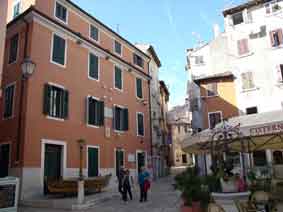
The old city of Rovinj is on the end of a peninsula. The plaza by the port
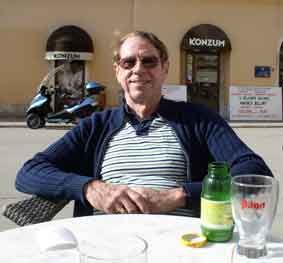
has popular bistros where Stjepan waited for me
 .
.  .
. 
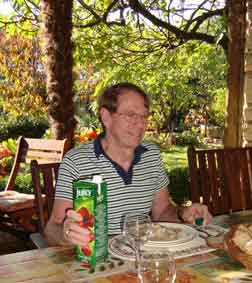
Having a juice with Stjepan (he had something stronger).
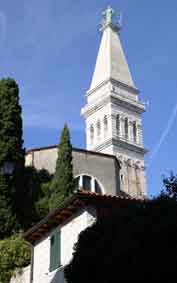
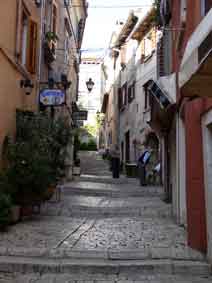
Polished stone streets, and the church on the hill
 .
.  .
.  .
. 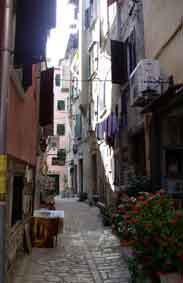
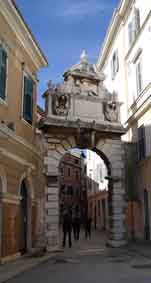
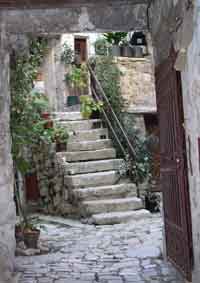
The gate to the old town; narrow streets and doorways
 .
.
 .
.
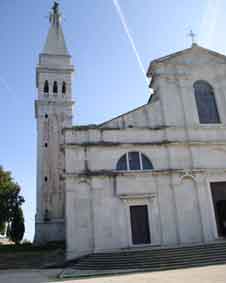
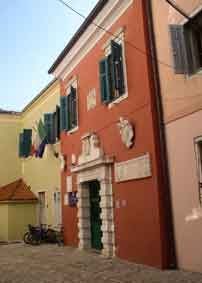
City Hall, old tobacco factory, now a university centre, and the
church on the top of the hill facing the sea
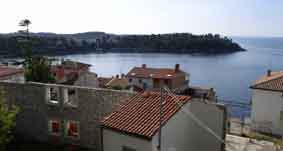 .
. 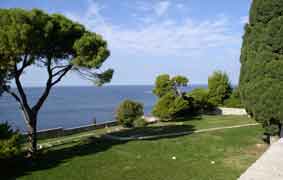
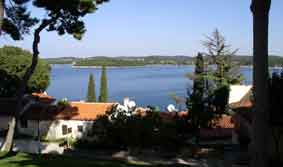
Views from the front of the church
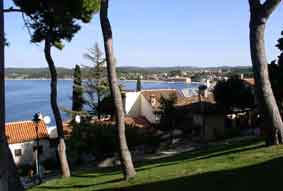 .
. 
 .
. 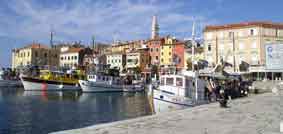
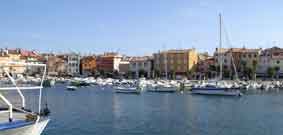
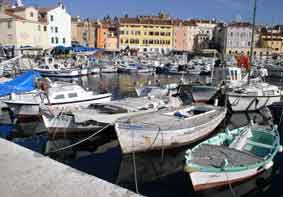
The port full of fishing boats and pleasure boats
 .
. 
 .
. 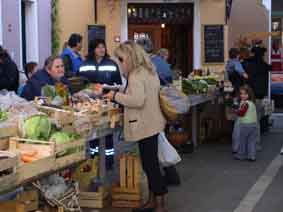
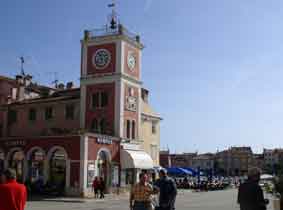
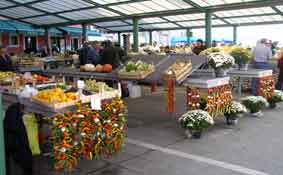
The market
Stjepan then drove me to Pula to catch the boat to the Brioni Islands.
Brioni Islands, Croatia
The European Center for Peace and Development, associated with the UN
University for Peace, invited me to its 5th International Conference on
National and Inter-Ethnic Reconciliation, Religious Tolerance and Human
Security in the Balkans, where I gave a paper on "Human
Security and Climate Change - the Ethical Challenge". The conference
was held on the Brioni Islands off the Istrian Peninsula near the city of
Pula, Croatia, in a hall previously used by the Central Committee of the
Communist Party in Yugoslavia. A little time was set aside to visit the main
island, which had been developed as a resort by an Austrian industrialist
early in the 20th century, before becoming the main residence of Marshall
Tito, where he governed Yugoslavia and received many heads of state and
celebrities. The islands are now a national park open to the public, except
some houses reserved for government use.
 .
.
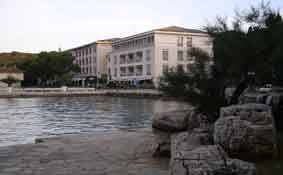
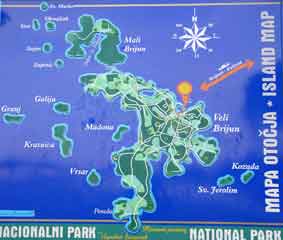
Map of the National Park, and the hotel where our conference took
place
 .
.  .
. 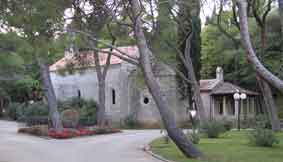
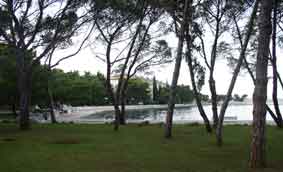
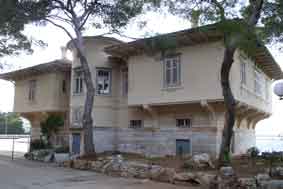
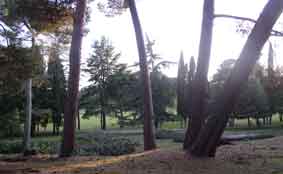
The harbour, the old boat house from the Austrian period, and a
chapel dating from Venetian times
 .
.  .
. 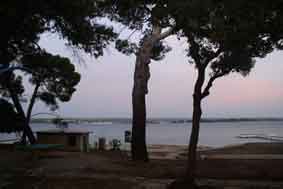
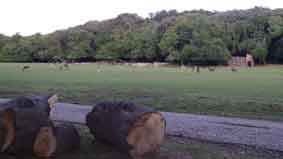
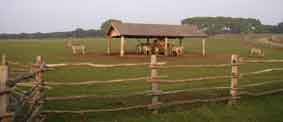
The island has been reforested, but numerous deer keep the vegetation
clear and mow the golf course; one of the swimming beaches
 .
.  .
. 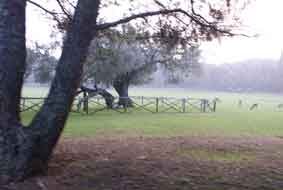
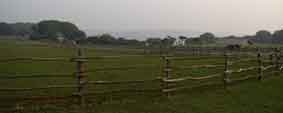
There is a safari park and former zoo where Tito kept the animals he
received as gifts; one olive tree is 1,600 years old
Windsor Castle, England
On 2-4 November 2009, I went to Windsor, United Kingdom, where
representatives of nine major faiths gathered to celebrate their
long-term action plans for a living planet, addressing climate change and
the environment. The International Environment Forum had helped the Bahá'í
International Community in the preparations, and I was one of two BIC
representatives for the launching of the Bahá'í
International Community's Seven Year Plan of Action for Climate Change.
The event was organized by the Alliance of Religions and Conservation (ARC)
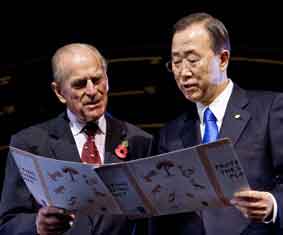
and the United Nations Development Programme (UNDP). His Royal Highness the
Duke of Edinburgh received us at Windsor Castle on 3 November, together with
UN Secretary-General Ban Ki-moon, and both presented us as representatives
of the Bahá'í International Community with certificates of appreciation
from the United Nations and from ARC for the action plan. A full report
is on the IEF web site, and the ARC web page about the celebration is http://www.arcworld.org/projects.asp?projectID=597.
(Photos courtesy of ARC/Richard Stonehouse)
 .
.  .
. 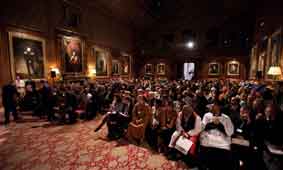
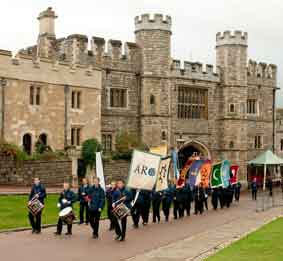
We made a procession to and from Windsor Castle, with banners for all of the
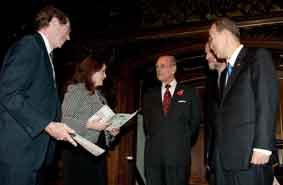
faiths (left). HRH Prince Philip and Ban Ki-moon with the certificates
(center). The celebration was held in the Waterloo Room, with over 200
representatives of religions and secular environmental groups in attendence.
Since Bahá'í comes first in alphabetical order, the BIC representatives are
first row center (right). There were 31 faith-based action plans launched in
Windsor, and 6 more announced to come later.
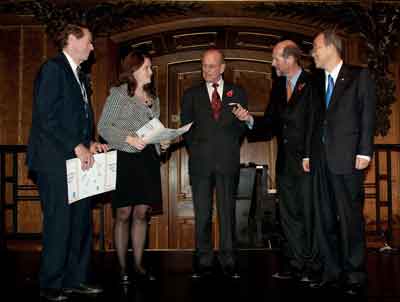 We were the first to receive the certificates of appreciation while a
summary of the action plan was read out. From left to right, Arthur Dahl and
Tahirih Naylor representing the Bahá'í International Community, Prince
Philip, Martin Palmer (Secretary-General of the Alliance of Religions and
Conservation), and UN Secretary-General Ban Ki-moon.
We were the first to receive the certificates of appreciation while a
summary of the action plan was read out. From left to right, Arthur Dahl and
Tahirih Naylor representing the Bahá'í International Community, Prince
Philip, Martin Palmer (Secretary-General of the Alliance of Religions and
Conservation), and UN Secretary-General Ban Ki-moon.
 .
. 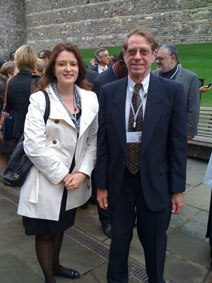
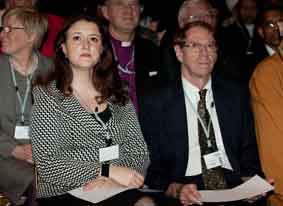
Bahá'í International Community representatives Tahirih Naylor and Arthur
Dahl
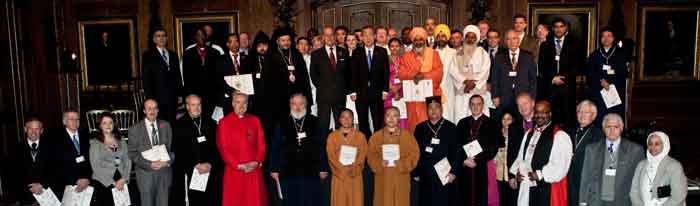 The dignitaries of nine religions launching their action plans at
Windsor, with Prince Philip and Ban Ki-moon
The dignitaries of nine religions launching their action plans at
Windsor, with Prince Philip and Ban Ki-moon
(I am in back, third from the right)
After the presentation of the certificates and a keynote address by Ban
Ki-moon, we had the first all vegen banquet in an English royal residence in
the hall of the Knights of the Garter, followed by a musical/theatrical
performance drawing on all the faith traditions. There were also workshops
on the days before and after the ceremony where we could exchange experience
among the religions and with secular environmental organizations.
After the Windsor event, I went to the University of Brighton, which has now
made me a Visiting Professor, to chair the consortium group meeting of the
EU-funded project on values-based indicators of education for sustainable
development. We took a break the evening of Guy Fawkes' Day to watch the
torchlight parades, bonfires and fireworks in Lewes, dramatic and rather
pagan, with loud firecrackers thrown everywhere. On the weekend I returned
to London to speak for the Bahá'í community of Barnet at its Dignitaries
Meeting, and went back to Brighton for a talk on coral reefs at a Bahá'í
fireside and two more days work at the university, before returning to
Geneva.
Malaga, Spain
On 19-22 November I went to Malaga, Spain for the International Union on
Conservation of Nature (IUCN) for a global meeting on islands. Because of
the importance of islands for evolution and the conservation of biological
diversity, IUCN has launched an Islands Initiative with a full-time
programme officer, and is hosting a coordinator for the Global Islands
Partnership (GLISPA). I have been asked to lead a thematic group on island
ecosystems with experts from the IUCN Commissions in support of this
initiative. This was my first time to visit Malaga since I passed through
over Christmas vacation in 1961, when I was a student in France. We were
staying close to the cathedal, so I snapped a few pictures in the
neighborhood.
 .
.  .
. 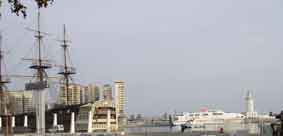
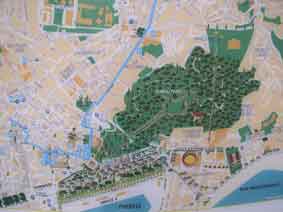
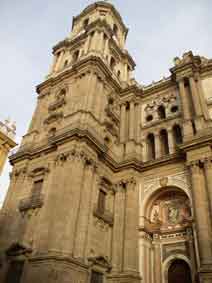
Map of Malaga, with its castle on a forested mountain, and the sea
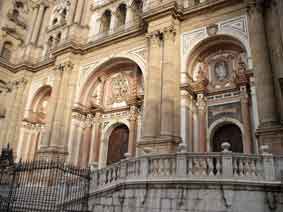
port to the south. The cathedral doors are ornate
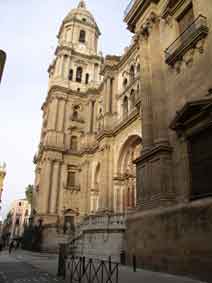
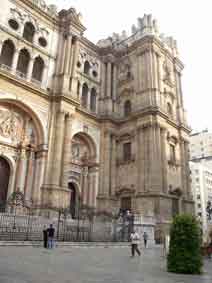
The cathedral shows the wealth that came with the Spanish empire in the New
World
 .
.  .
.
 .
. 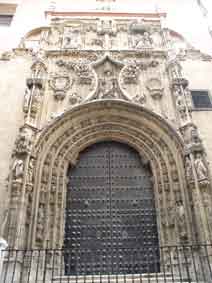
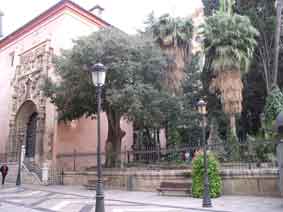
The chathedral is surrounded by buildings and hard to photograph. Its
right tower was never finished. Even the side door is elaborate
 .
.  .
. 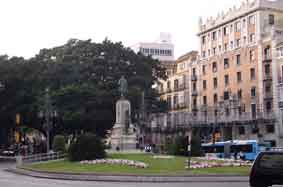
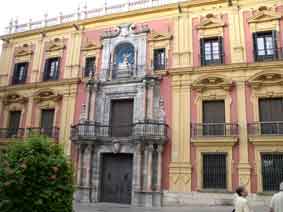
A small garden to the side of the cathedral. The
bishop's palace. A square on the main thoroughfare
 .
.  .
. 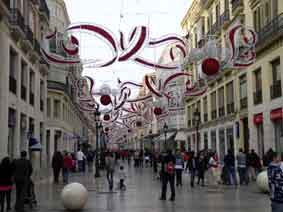
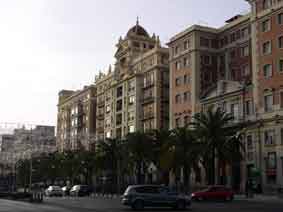
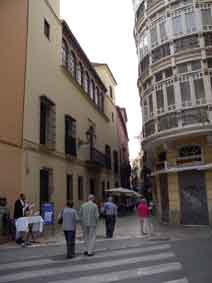
Street scenes. A pickpocket nearly took my wallet while I was taking
one of the pictures.
For my trip to Copenhagen 2-19 December 2009 for the International
Climate Change Conference, see the report with pictures on the
International Environment Forum web site at https://iefworld.org/COP15.html.
Return to travel
page - Return to personal home page
Last updated 20 March 2015
Photographs copyright © Arthur Lyon Dahl 2009, except Windsor Castle